Whale Watching in Kauai: Season, Boats, and Shore Lookouts
When to see humpback whales on Kauai: November to April with a January to March peak, which boats actually get you out there, and the shore lookouts.
 Written with Kainoa Kealoha, Kauai tour specialist and island experience guide
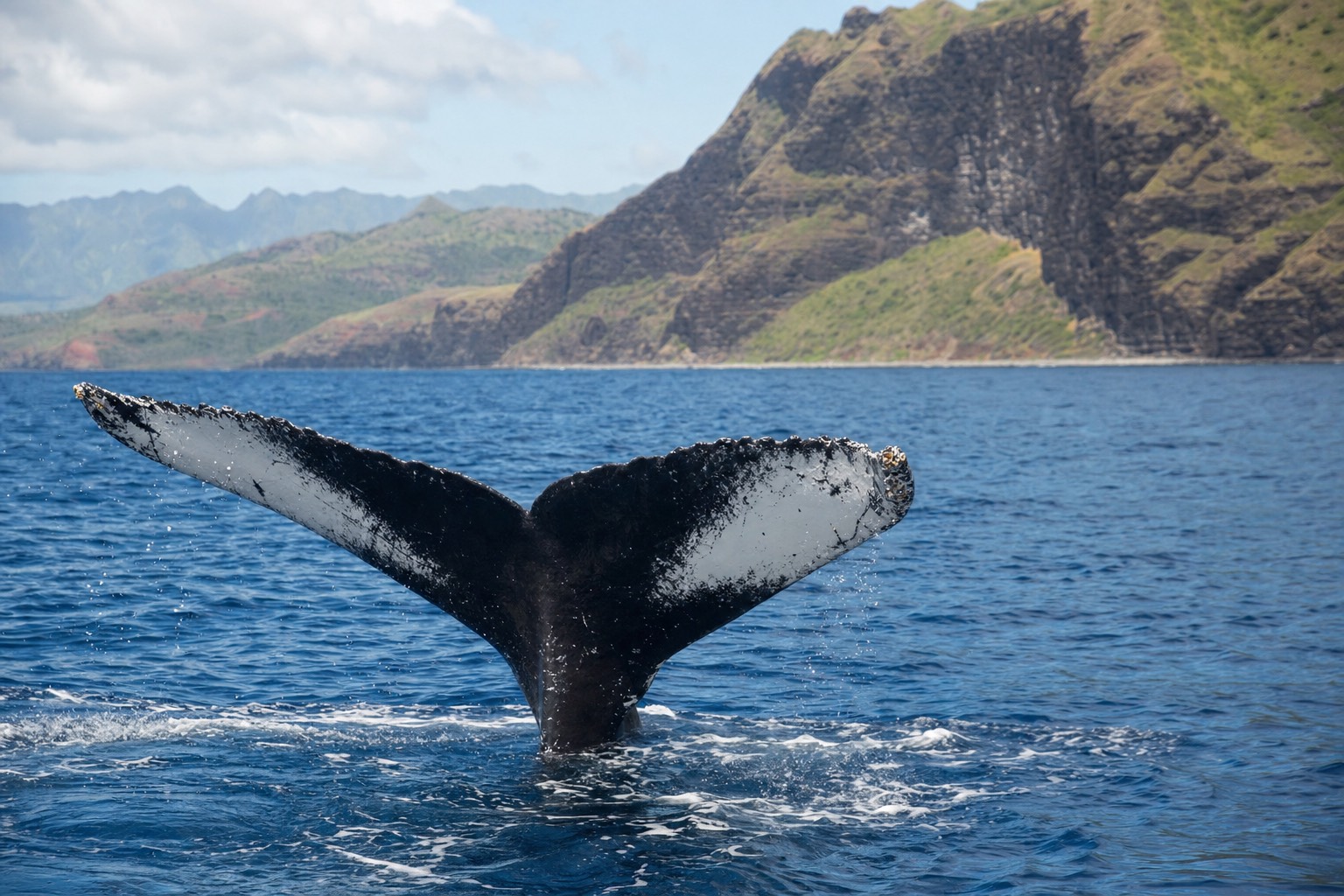
A blow on the horizon looks like a puff of smoke that should not be there. Then another, closer, and the bluff you are standing on goes quiet while everyone stares at the same patch of ocean. From late fall into spring, humpback whales fill the channel off Kauai, and you do not need luck to see them. You need the right month, and an honest read on how to get out there.
Booking choice: For a whale-focused trip, compare the dedicated 2.5-hour Zodiac outing with the shorter winter cruise. Both depend on season, conditions and wildlife; sightings are not promised. Explore this outing
What is the best month to see whales in Kauai?
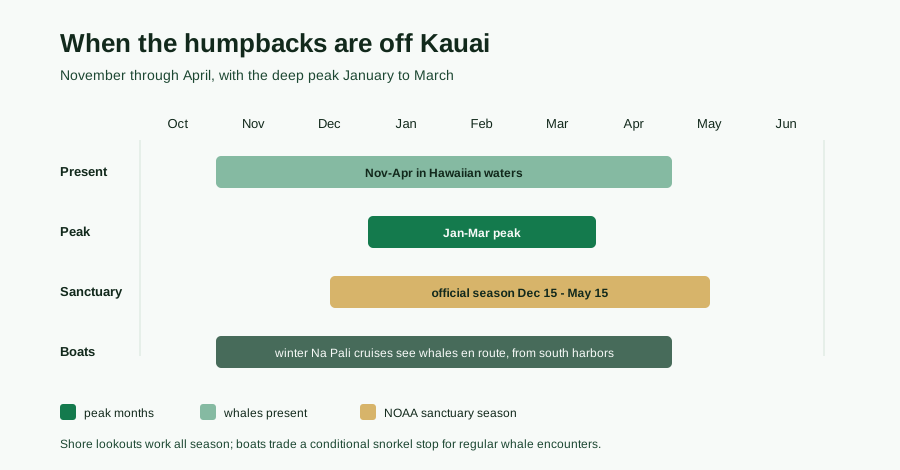
Humpback whales are in Hawaiian waters from November through April, and the peak on Kauai runs January through March. The federal sanctuary's official season is December 15 to May 15. Book a winter Na Pali cruise inside that January-to-March window and sightings en route are a regular part of the trip.
The whales migrate down from Alaska each winter to breed and calve in Hawaii's warm, shallow waters. Arrivals build through November and December, the channel fills out after the new year, and by late April most animals are on their way north again. The Hawaiian Islands Humpback Whale National Marine Sanctuary protects these waters and runs its official season from December 15 through May 15, which is a useful federal marker for when the animals are around in numbers.
Plan around the middle of that window. January, February, and March are the months when a morning on the water or an hour on a bluff is most likely to pay off, and when the classic behaviors show: breaches, pec slaps, tail throws, mothers shadowed by calves. November and April still produce sightings, just with more patience required. Whale season also happens to be Kauai's quieter, greener, occasionally wetter half of the year; our best time to visit Kauai guide covers how the whale calendar lines up with weather and crowds.
| Month | Likelihood | What is happening |
|---|---|---|
| November | Early shoulder | First arrivals trickle in |
| December | Building | Numbers climb; sanctuary season opens December 15 |
| January | Peak | Channel is busy, activity high |
| February | Peak | The heart of the season |
| March | Peak | Peak numbers, calves everywhere |
| April | Late shoulder | Season winds down as whales head north |
What is the best whale watching tour in Kauai?
Two dedicated winter options are verified: a 2.5-hour whale-and-dolphin Zodiac outing and a two-hour winter whale cruise. These make whale watching the purpose of the trip. Na Pali cruises may also encounter whales in season, but a sighting is never guaranteed.
Choose a dedicated wildlife trip if humpbacks are your main reason to board. Compare vessel style, duration, check-in and suitability rather than assuming a longer coastal cruise is the better wildlife outing. The dedicated tours still rely on seasonal whale presence and ocean conditions.
Winter shapes every boat trip: swell can alter routes or cancel departures. Pick an outing early enough in your visit to leave possible rescheduling room, and read the exact cancellation terms for your selected date. Neither a dedicated whale tour nor a Na Pali cruise promises a sighting.
| Factor | Summer cruise (May-Sep) | Winter cruise (Nov-Apr) |
|---|---|---|
| Whales | Not in Hawaiian waters | Regular sightings, peak Jan-Mar |
| Snorkel stop | Most likely to run | Conditional, often skipped |
| Sea state | Calmest of the year | Bumpier, dress for spray |
| Departures | South harbors, plus seasonal Hanalei options | South harbors at Port Allen and Kikiaola |
| The trade | Reef time and glassy water | Whale encounters along the cliffs |
Can you see whales from shore?
Yes. In peak season you can spot blows, breaches, and tail slaps from Kauai's bluffs without a ticket. Bring binoculars, pick an elevated lookout with a wide horizon, and give it half an hour. Shore watching costs nothing; a boat trades that patience for proximity and a captain's trained eyes.
Shore watching is one of winter's genuine free pleasures here. The technique is simple: get height, face open water, and scan slowly for the blow, which hangs in the air longer than the whale shows itself. Once you find one animal, keep watching the same area, because surface activity tends to come in bursts. Elevated points along the north and east shores and the sunny bluffs above the south coast all work; morning light and calm wind make the blows easier to pick out. The official Kauai visitor pages list coastal parks and overlooks if you want to build a lookout crawl into a driving day.
The honest comparison with a boat comes down to distance and time. From shore the whales are specks that occasionally become spectacles. From the water they are animals with scale, breath you can hear, and behavior a crew can interpret for you. Doing both in one trip is the move: bluff mornings with coffee, one cruise booked for the full Na Pali experience, and the FAQ covers harbor logistics and what to bring in winter.
| Factor | From shore | From a cruise |
|---|---|---|
| Cost | Free | Tour fare, live price on the listing |
| Distance | Far; binoculars earn their keep | Much closer, with a crew spotting for you |
| Time required | Patience, in half-hour sits | About 5.5 hours for the Na Pali run |
| Bonus | Fits any itinerary, any day | Cliffs, sea caves, lunch, open bar |
| Weather risk | You just drive home | Winter departures can reschedule |
If whales are the point of your trip, the planning is refreshingly simple. Come between January and March, spend your bluff mornings scanning for blows, and put one winter cruise on the calendar knowing the snorkel stop is the maybe and the whales are the likely. The channel does the rest.
Plan your paid experience
Check the outing that fits your day
Initial editorial choice, not a personalized eligibility check. Confirm the operator’s full requirements before booking.
Choose a dedicated winter wildlife outing
This screens only the details you enter. Health, weight balance, language, pickup and all remaining restrictions still need operator confirmation. Time allowances exclude your journey to the meeting point.
- Kauai whale & dolphin Zodiac adventure — A dedicated winter wildlife outing instead of hoping for a sighting on another tour. 2.5 hours plus check-in. Seasonal whale watching; sightings cannot be promised. Moderate fitness; no pregnancy or relevant back or heart conditions. No hotel pickup.
- Winter whale-watching adventure — A shorter winter cruise devoted to looking for humpbacks. 2 hours; check in 45 minutes ahead. Moderate fitness and a 200-yard walk to the boat. No pregnancy or listed back, neck, heart or recent-surgery conditions. Wildlife sightings are not guaranteed.
Compare your actual party totals
Enter current quotes in the same currency. “Separate spending” means costs you would actually avoid, not a rental day you still pay for.
Kauai whale & dolphin Zodiac adventure
Have your travel date in mind? Check it before arranging the rest of the day. A dedicated winter wildlife outing instead of hoping for a sighting on another tour.
2.5 hours plus check-in. Guide, boat trip, snacks and drinks.
Seasonal whale watching; sightings cannot be promised. Moderate fitness; no pregnancy or relevant back or heart conditions. No hotel pickup.
Schedule loading. You can still check dates directly on Viator below.
Scheduled dates are not confirmed seats. Select the same date on Viator to confirm availability and the final price.